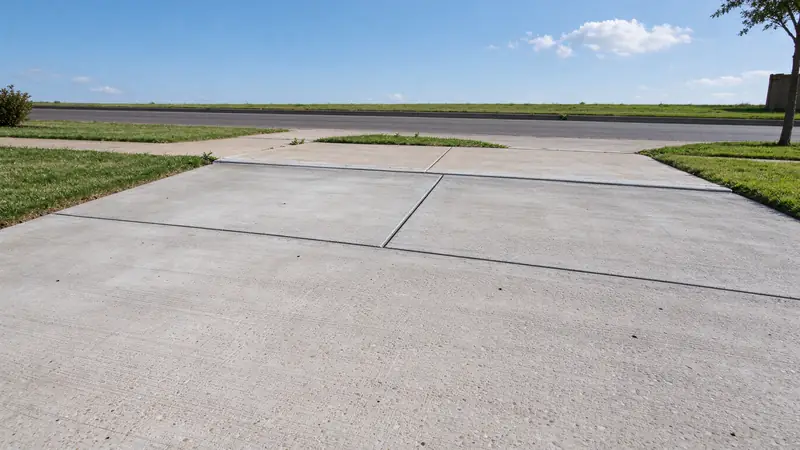
Elm Driveway Repair San Antonio provides driveway apron repair for residential and commercial driveway or pavement situations within the services listed on this site. The starting point is the specific problem: settled or cracked transition between private driveway and street. An effective plan should explain what failed, whether the underlying pavement is still sound, and which work actually addresses the cause. There is no reason to propose a full tear-out when a smaller repair is technically appropriate.
The apron can cross a legal boundary between private pavement and public right-of-way. A failed transition may result from wheel loading, poor support, drainage or movement in the adjacent roadway and sidewalk. This is also why an estimate should describe the limits of the proposed repair instead of promising that every visible symptom will disappear.
Request an estimate: send project details or call (210) 405-3676.
Repair methods and material choices
Map the property line and approach, check the road authority, measure the height and slope, determine whether an isolated panel can be replaced and plan curb, sidewalk and traffic protection as required. A good estimate describes the method in plain language and identifies the intended outcome. For example, a method that stabilizes underlying support has a different purpose from a coating that protects the existing surface. The choice affects preparation, equipment, curing or compaction, appearance and the length of time an area must stay out of use.
Related: curb cuts, sunken driveway repair and driveway drainage. More than one operation may be involved, but every added operation should have a reason connected to a specific problem. The goal is not to make the quote sound comprehensive by listing unrelated trades.
What changes the work in this situation
A driveway apron may cross a public right-of-way even though the owner drives on it daily. A crack near the street is not automatically governed by the same rules as a crack by the garage. Identify where the curb and sidewalk lie, whether the apron has settled, and which authority controls the road. In San Antonio, public approach work can follow a different process from qualifying private flatwork; the surrounding cities and county maintain separate requirements.
What a useful proposal should explain
Where an apron is low, the repair should consider the street elevation and water path. Lifting an intact slab may be possible under suitable conditions, while a fractured panel may need removal and rebuilding. A cosmetic patch can create a sharp vehicle transition or block drainage if finished grades are wrong. A detailed scope should identify permit responsibility, demolition area, base correction, curb connection and traffic or pedestrian access during work.
A useful site description for this service
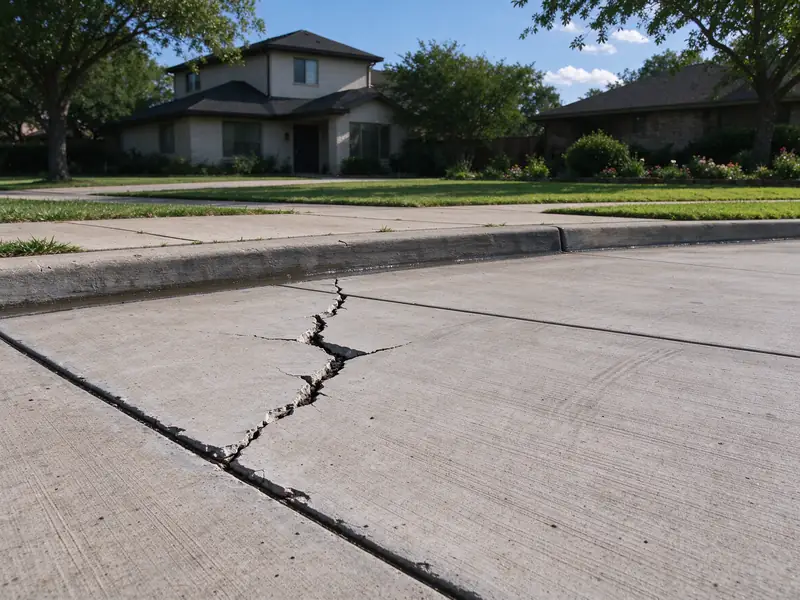
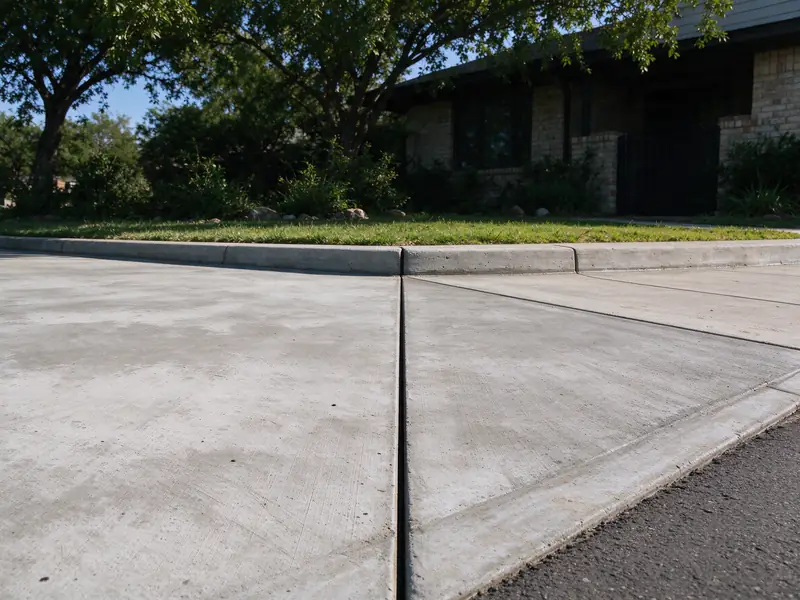
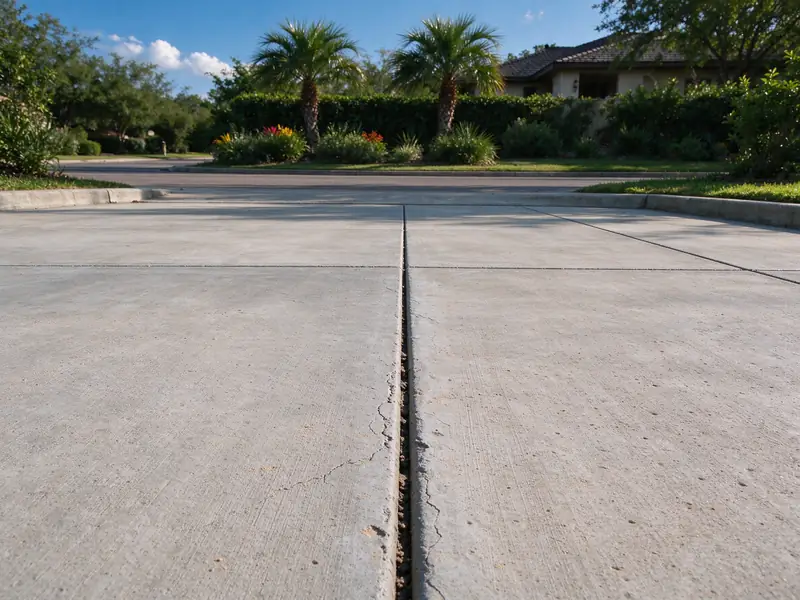
Photograph the apron from the street and from the private driveway. A clear image can show whether the problem is a broken curb edge, a settled panel, a joint gap or a grade change across the sidewalk. The contractor should identify the road authority and determine whether work is inside public right-of-way. Where the slab remains intact, a lifting method may be considered only if technically and administratively appropriate. Rebuilding the apron requires the grade to meet both street and driveway properly; a patch that creates a bump is not a good repair.
Price guidance and what changes the estimate
There isn't a dependable flat San Antonio price for this exact service, so an estimate has to start from the conditions on site. The estimate must account for the damaged area, existing base, access, material or method, water management and disposal. For a longer breakdown of the work and cost drivers, see the related cost guide. Typical budgeting ranges are not a quote and do not replace a job-specific estimate.
Photographs and information that clarify the scope
Include a photograph from the road toward the private driveway that shows the curb, sidewalk and any broken panel. Street-side work can involve a different permit authority. A single image of the cracked concrete cannot establish which agency controls the approach.
Site-specific checks before choosing this service
The driveway apron is the transition between the private drive and the roadway. Its boundaries may overlap public right-of-way or sidewalk requirements. Inspect curb height, water flow and how cars cross the transition before deciding whether a single concrete panel is the complete repair.
A dropped apron often creates a noticeable bump at the garage or sidewalk. Lifting an intact slab may be considered when jurisdiction and geometry permit, while a broken approach may require replacement to approved dimensions. A simple patch can leave a drainage dip or an unsafe transition.
The scope should name the road authority, approach limits, traffic management and any permits or inspections. Ask who restores adjacent sidewalk or curb work and which owner is responsible for any separately regulated section.
Questions about driveway apron repair
Who controls my street-side apron?
It depends on the roadway and property boundaries. The apron may lie in public right-of-way, so confirm the responsible agency rather than assuming the whole panel belongs to one party.
Is an apron permit always required?
Not always, but a regulated public approach may require review even if private interior work does not. Check the exact road owner and work scope.
Why does an apron keep sinking?
Loss of bedding, drainage or compaction issues can cause movement at the street transition. A surface crack alone cannot establish the exact reason.
Can the apron be lifted instead of replaced?
An intact settled slab may be assessed for lifting where the method and local requirements allow it. Broken material or noncompliant grades can require replacement.
Compare related driveway work
Driveway Replacement · Driveway Drainage · Driveway Resurfacing · Get an Estimate. These pages help distinguish surface maintenance from structural repairs, and repair from a full reconstruction. A customer should be able to compare scopes without guessing that different service labels are interchangeable.
For an estimate, include the problem location, surface material and photographs of the damaged area in the project inquiry. There is no need to choose a construction method before describing the issue.
What this work looks like
NEXT READING