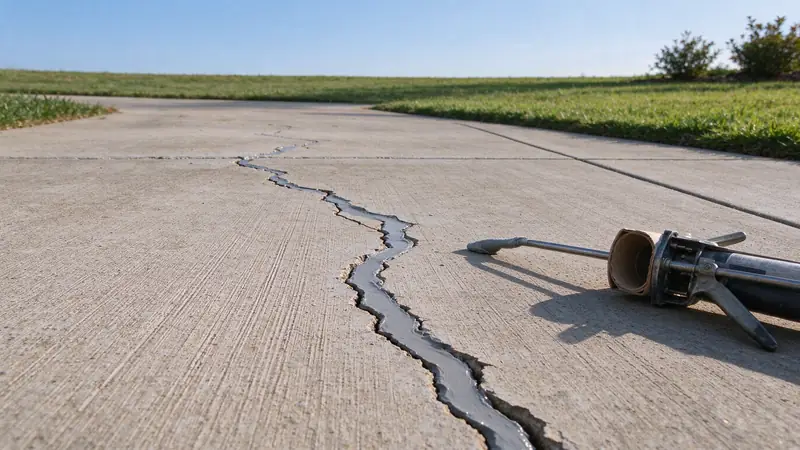
Elm Driveway Repair San Antonio provides driveway crack repair for residential and commercial driveway or pavement situations within the services listed on this site. The starting point is the specific problem: longitudinal, transverse, diagonal and map cracks in concrete driveways. An effective plan should explain what failed, whether the underlying pavement is still sound, and which work actually addresses the cause. There is no reason to propose a full tear-out when a smaller repair is technically appropriate.
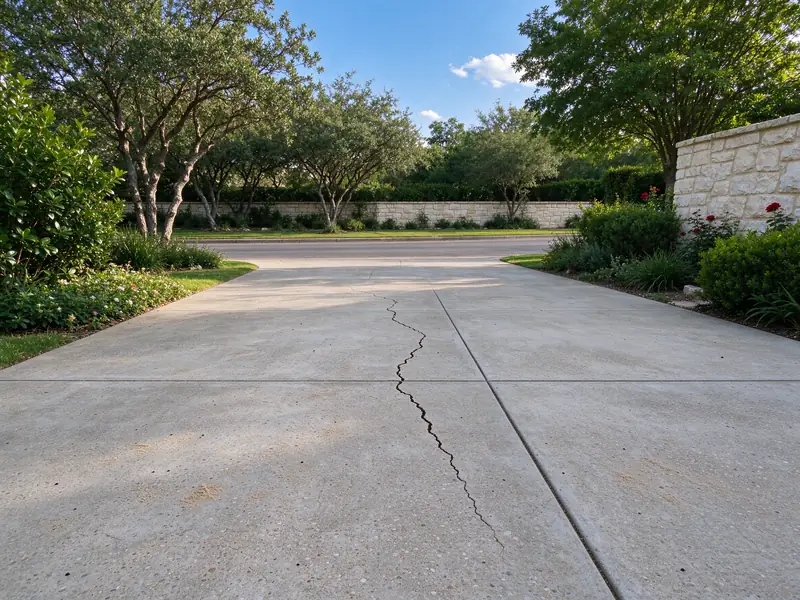
Hairline shrinkage cracking differs from a widening crack that moves across a joint or crosses multiple panels. A crack that changes width or shows a height difference may signal movement rather than a simple sealing job. This is also why an estimate should describe the limits of the proposed repair instead of promising that every visible symptom will disappear.
Request an estimate: send project details or call (210) 405-3676.
Repair methods and material choices
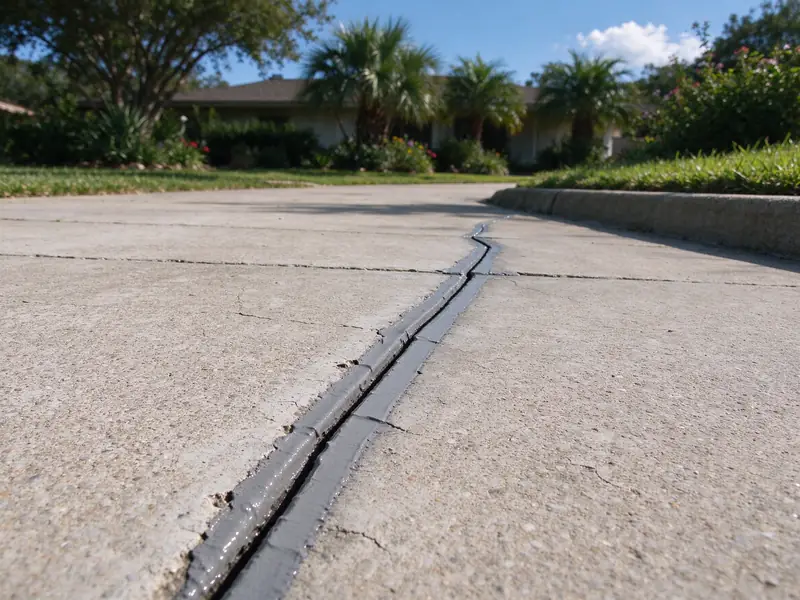
Clean out loose material, establish a suitable profile, choose a compatible flexible sealant or repair compound, and respect required cure time before vehicle traffic. Different crack widths and edge conditions affect the repair system. A good estimate describes the method in plain language and identifies the intended outcome. For example, a method that stabilizes underlying support has a different purpose from a coating that protects the existing surface. The choice affects preparation, equipment, curing or compaction, appearance and the length of time an area must stay out of use.
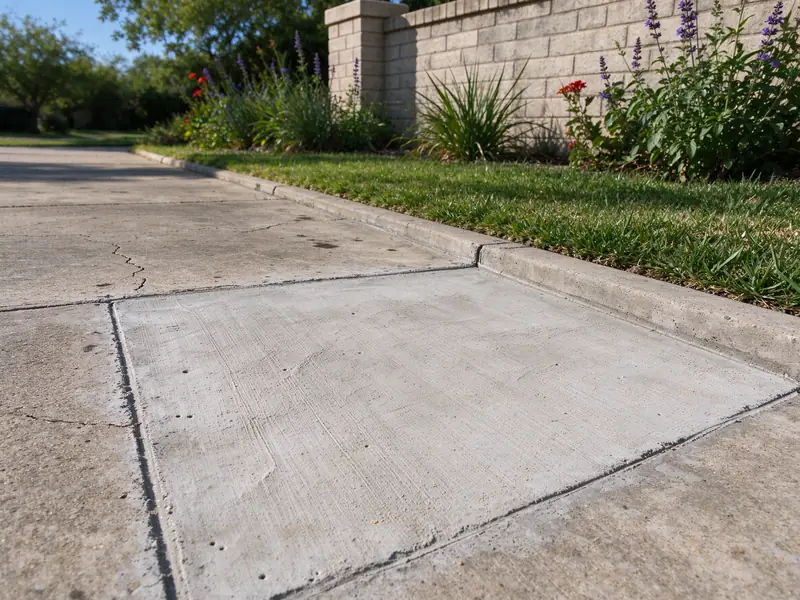
Crack repairs connect naturally to expansion-joint service, leveling and concrete replacement. More than one operation may be involved, but every added operation should have a reason connected to a specific problem. The goal is not to make the quote sound comprehensive by listing unrelated trades.
What changes the work in this situation
The shape of a crack matters more than whether it is visually noticeable. A narrow straight crack that remains level can sometimes be filled, but a step across the crack is evidence that two sides are not at the same elevation. A random crack passing through a panel should not be treated in the same way as an intentional saw-cut control joint. Appropriate filler depth, sidewall preparation and movement accommodation affect performance. The customer should understand whether the method mainly limits water entry or is intended to stabilize the material.
What a useful proposal should explain
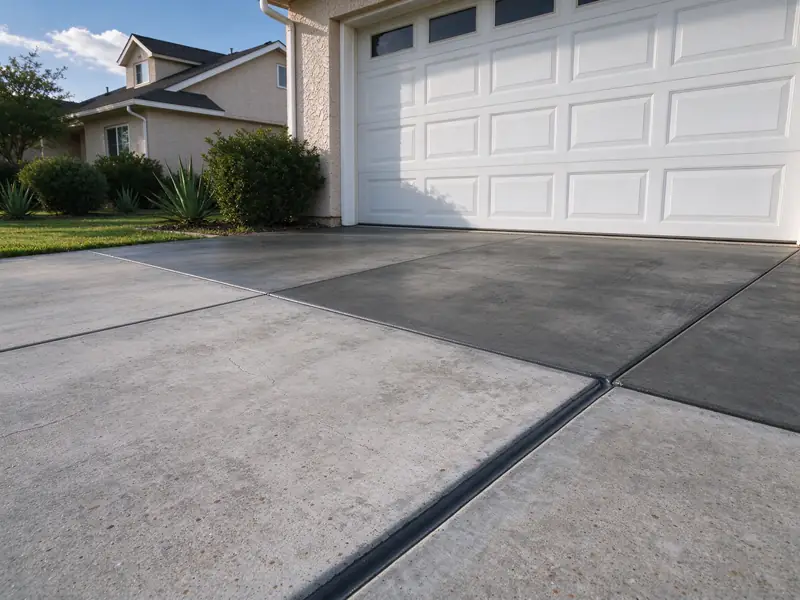
Photographs taken from above can miss a vertical difference. A side angle at a joint and a view of the entire driveway can help establish whether the crack is isolated. When the area has recurring movement, adding more rigid patch material may produce another crack nearby. If water runs into the opening from a downspout or low grade, correcting that path can be part of a broader scope. A crack repair quote should say whether adjacent spalling, joint filler and drainage are included.
Price guidance and what changes the estimate
Published figures for crack filling vary too widely to give a dependable range, partly because some price only the sealant while others include routing, cleaning and labor, and they do not agree on whether to count linear feet or square feet. A crack-filling estimate is therefore built from the driveway itself. The main drivers are the total length of crack to be treated, the width and depth of each opening, whether the cracks must be routed or widened and cleaned before filling, and the minimum charge for a visit, which can outweigh the material on a short run of cracks. Stable cracks within a scoped filling job are a different job from structural repair, and none of these drivers predicts what an active, moving crack will need. For a longer breakdown of the work and cost drivers, see the related cost guide. Cost guidance of this kind is not a quote and does not replace a job-specific estimate.
Photographs and information that clarify the scope
A close image with a ruler beside an opening can help show its width without claiming the depth. Add a side-angle photo if there is a vertical step and note whether the crack extends to the adjoining panel. Those details matter more than a dramatic close-up.
Site-specific checks before choosing this service
Take photographs both along a crack and across it. A side-on view reveals vertical offset that a top-down picture may hide. Record whether the opening follows a deliberate control joint, runs diagonally across a slab or branches into many small cracks; these distinctions make a difference to preparation and filler choice.
A flexible crack sealant mainly limits debris and water entry in a suitable joint; it does not restore the bearing capacity of unsupported concrete. Rigid repair products can fail where the two sides continue moving. The contractor needs to decide which behavior the chosen material is expected to accommodate.
A useful scope lists crack lengths, the widths or profiles that require treatment, cleaning method and cure precautions. Where the crack crosses a low spot, separate drainage corrections from the sealing work instead of hiding them inside a single lump-sum line.
Questions about driveway crack repair
Which cracks can be filled?
Stable narrow cracks that have not moved vertically are more likely to be appropriate for filling. The opening must be cleaned and its size considered before selecting a material. A crack with displacement or repeated widening needs an assessment of slab support rather than just a new layer of filler.
What causes a crack to reopen?
A filled crack can reopen if it continues to move, if moisture enters from an unresolved drainage problem, or if the product cannot accommodate the joint behavior. The underlying movement and preparation should be discussed before expecting a lasting cosmetic finish.
Should cracks be sealed before winter?
Crack sealing can help limit water and debris entry, but whether it should be scheduled depends on surface condition and weather suitable for the product. A contractor should explain why the crack is stable enough for filling and when the area can return to use.
Does a crack mean the foundation is moving?
No. A cracked driveway does not diagnose foundation movement. Concrete shrinkage, settlement, roots, loading and surface conditions can cause cracks. If nearby structures show independent movement, an appropriately qualified evaluation may be necessary rather than an inference from one driveway crack.
Compare related driveway work
Driveway Replacement · Driveway Drainage · Driveway Resurfacing · Get an Estimate. These pages help distinguish surface maintenance from structural repairs, and repair from a full reconstruction. A customer should be able to compare scopes without guessing that different service labels are interchangeable.
For an estimate, include the problem location, surface material and photographs of the damaged area in the project inquiry. There is no need to choose a construction method before describing the issue.
What this work looks like
NEXT READING