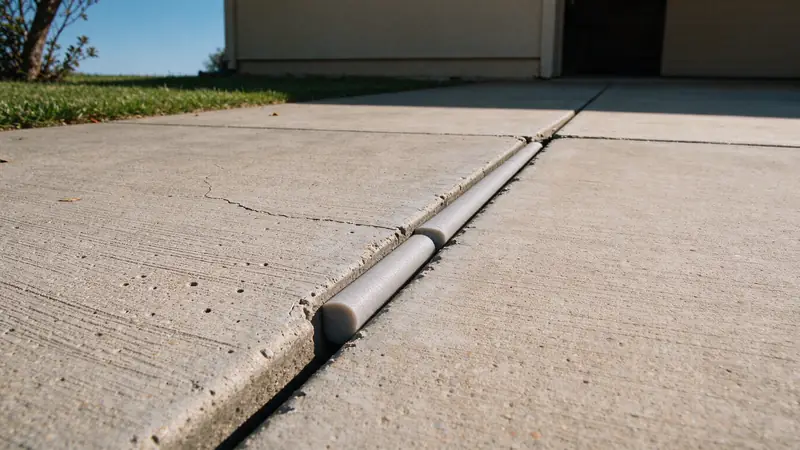
Elm Driveway Repair San Antonio provides driveway expansion joint repair for residential and commercial driveway or pavement situations within the services listed on this site. The starting point is the specific problem: open, missing or deteriorated joints around slabs and fixed structures. An effective plan should explain what failed, whether the underlying pavement is still sound, and which work actually addresses the cause. There is no reason to propose a full tear-out when a smaller repair is technically appropriate.
The purpose and location of a joint matter. A planned isolation joint at a garage or sidewalk behaves differently from an unplanned crack, and a saw-cut control joint should not automatically be filled as if it were a full-depth separation. This is also why an estimate should describe the limits of the proposed repair instead of promising that every visible symptom will disappear.
Request an estimate: send project details or call (210) 405-3676.
Repair methods and material choices
Remove deteriorated filler, check depth and sidewall condition, use backer material where needed, and apply a sealant compatible with expected movement. Attention to adhesion geometry and drainage makes the repair more durable. A good estimate describes the method in plain language and identifies the intended outcome. For example, a method that stabilizes underlying support has a different purpose from a coating that protects the existing surface. The choice affects preparation, equipment, curing or compaction, appearance and the length of time an area must stay out of use.
Direct visitors to crack repair and apron repair when the problem extends beyond the joint. More than one operation may be involved, but every added operation should have a reason connected to a specific problem. The goal is not to make the quote sound comprehensive by listing unrelated trades.
What changes the work in this situation
A joint filler is meant to accommodate movement and help keep debris out, but joint design has limits. A too-rigid material can crack or transfer pressure to adjacent concrete, while a sealant placed without suitable depth control may tear or fail to adhere. Cleaning the joint is not just an aesthetic step. Loose fragments, soil and old material can prevent proper bonding, and a joint too deep for its sealant may require a compatible backer before application.
What a useful proposal should explain
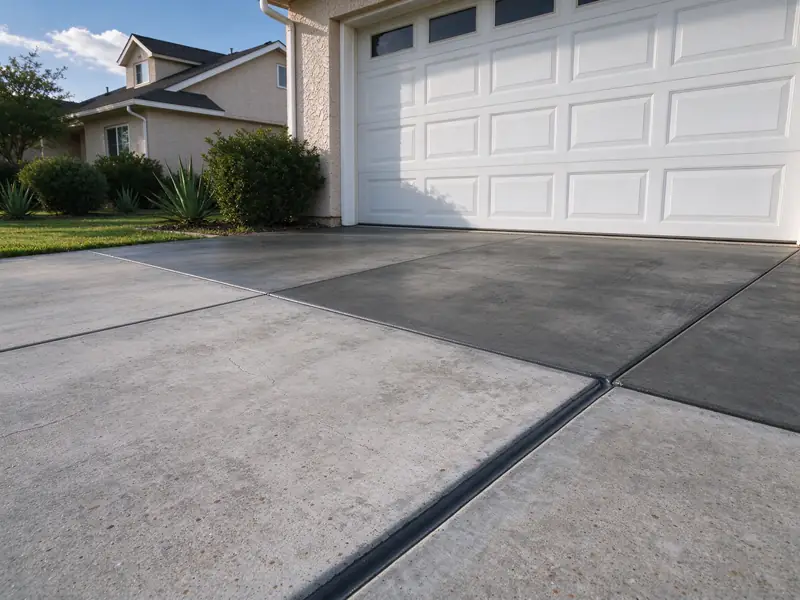
The location of the joint changes the decision. A driveway panel meeting the garage foundation often needs to remain separated rather than bridged by rigid mortar. A saw-cut line within concrete is a control joint and should be treated according to its intended function. If the adjacent panel has moved vertically, sealing the gap will not restore support. The appropriate proposal should describe the existing joint, material selection and any structural condition that must be addressed separately.
A useful site description for this service
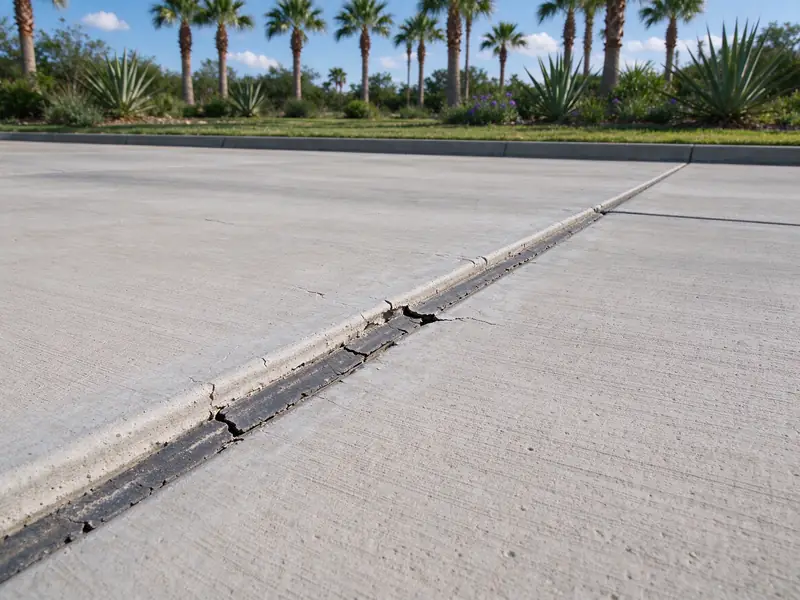
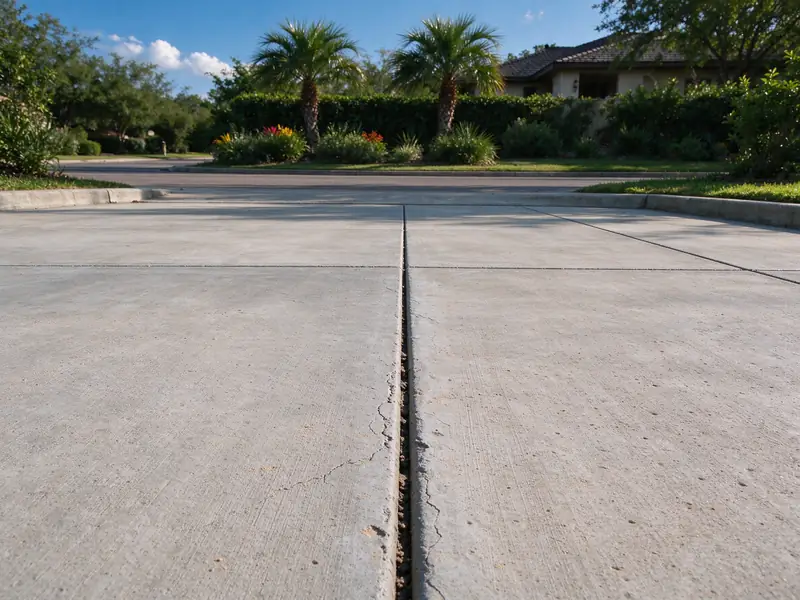
A photograph of a damaged joint should show the full gap and what it separates. The garage isolation joint has a different function from a narrow saw-cut line in the middle of a slab. Measure the visible opening only if it is safe, and note missing filler, trapped soil or broken concrete edges. The repair scope should discuss whether existing material is removed, whether backer material is needed and the desired sealant profile. If the surrounding slabs have moved vertically, a joint product alone cannot return them to a safe grade, so leveling or replacement belongs in a separate decision.
Price guidance and what changes the estimate
There isn't a dependable flat San Antonio price for this exact service, so an estimate has to start from the conditions on site. The estimate must account for the damaged area, existing base, access, material or method, water management and disposal. For a longer breakdown of the work and cost drivers, see the related cost guide. Typical budgeting ranges are not a quote and do not replace a job-specific estimate.
Photographs and information that clarify the scope
Include the full joint length and a close view of its current filler. Photograph any nearby broken edge separately, since rebuilding concrete is not the same work as sealing a movement joint. If the joint runs into the garage approach, show that transition clearly.
Site-specific checks before choosing this service
Joints intentionally separate slabs or accommodate movement. A joint filled with stones, grass roots or failed material cannot function as intended. Identify whether the opening is a planned isolation joint, an ordinary sawcut control joint or a random crack before selecting a product.
Sealant movement capacity and joint geometry matter as much as color. Too-shallow installation may tear, while an incompatible rigid filler can crack when the slab expands. Backer rod or other bond-breaking material may be needed to control depth and keep the filler working at the correct surfaces.
Ask for the approximate joint lengths, existing filler removal, surface cleaning and installation profile. The proposal should specify which adjoining curbs or garage joints are included, and clearly separate any concrete edge rebuilding from ordinary joint sealing.
Questions about driveway expansion joint repair
What happens when joint filler disappears?
Open joints can collect grit and water, and debris may restrict intended movement. Suitable flexible joint material can help protect the separation when the concrete edges remain stable.
Can I use rigid cement in a moving joint?
Rigid mortar can crack or damage edges in a joint designed to move. Backer material and an appropriate sealant profile may be needed instead. The original joint purpose should guide the treatment.
Does the garage joint need special attention?
A driveway-to-garage isolation joint can accommodate movement between the slab and building. It should not be filled indiscriminately with a rigid patch that bridges the two surfaces.
What is a control joint versus an isolation joint?
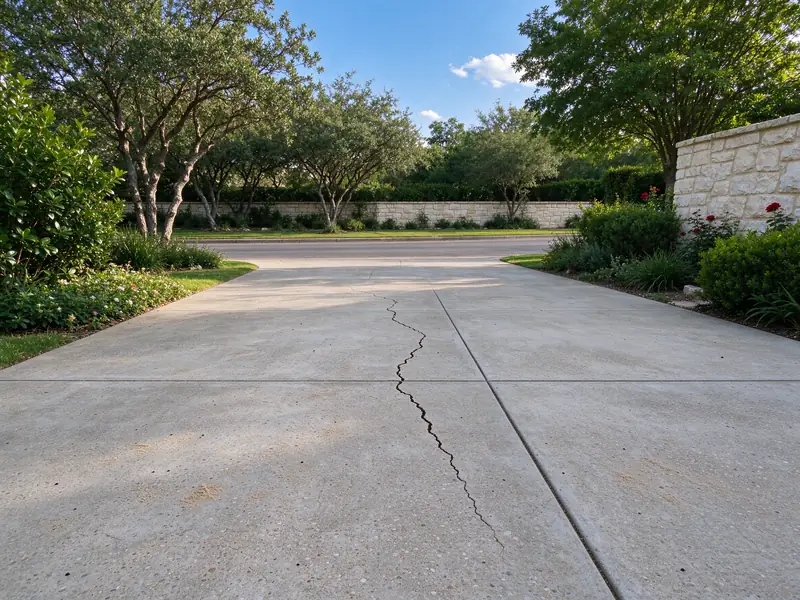
A saw-cut control joint encourages shrinkage to form at a chosen plane. An isolation joint separates concrete from another structure. Their location and purpose affect how a contractor prepares and seals them.
Compare related driveway work
Driveway Replacement · Driveway Drainage · Driveway Resurfacing · Get an Estimate. These pages help distinguish surface maintenance from structural repairs, and repair from a full reconstruction. A customer should be able to compare scopes without guessing that different service labels are interchangeable.
For an estimate, include the problem location, surface material and photographs of the damaged area in the project inquiry. There is no need to choose a construction method before describing the issue.
What this work looks like
NEXT READING